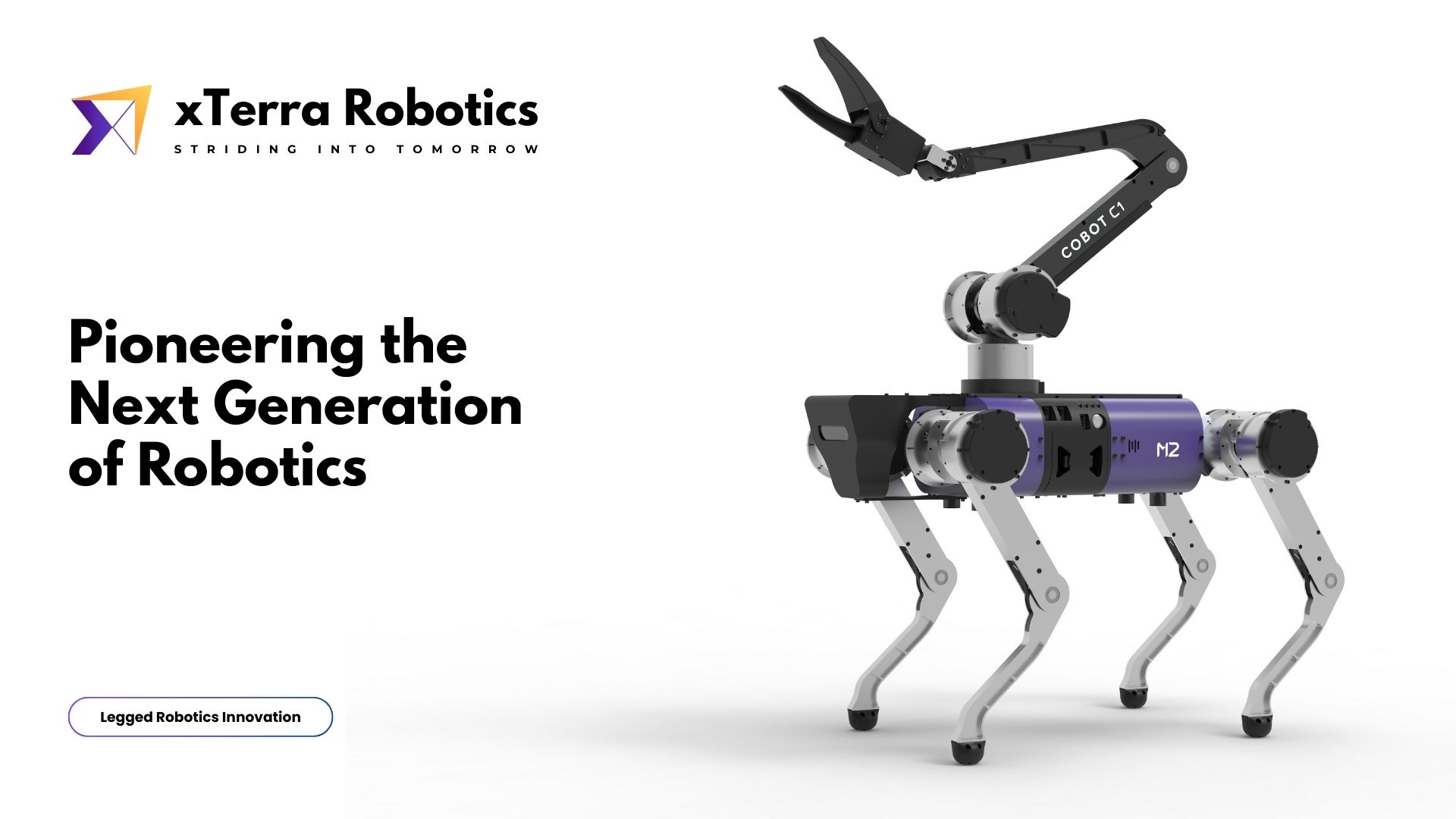
The Decades-Long Challenge
Legged robotics has captivated engineers and researchers for over half a century. The challenge is deceptively simple: create machines that can walk, run, and navigate the world as naturally as animals do. Yet this simplicity masks extraordinary complexity that has resisted solution for generations.
The fundamental problem lies in dynamic balance and control. While a wheeled robot operates on the stable foundation of continuous ground contact, legged robots must constantly manage the physics of falling and recovery. Every step is a controlled fall, requiring real-time computation of forces, torques, and trajectories across multiple degrees of freedom.
Early attempts in the 1960s and 70s were clunky, power-hungry machines that could barely shuffle across flat surfaces. The Honda ASIMO program showed what was possible, but remained a research curiosity with limited practical applications.
The Breakthrough Moment: Why Now?
Today, we stand at an unprecedented convergence of technological capabilities that has finally made practical legged robotics possible. This perfect storm of innovation has arrived simultaneously across multiple domains:
Computational Revolution
Modern edge computing platforms deliver the processing power that once required supercomputers, now in packages small enough to fit inside a robot's torso. AI accelerators and custom silicon enable real-time control loops that execute thousands of times per second.
Sensor Technology Maturation
Today's robots see and feel their environment with unprecedented precision. LIDAR sensors that cost $100,000 just a decade ago are now available for under $1,000. Inertial measurement units, force sensors, and cameras have reached automotive-grade reliability at chip-scale.
Actuator and Battery Breakthroughs
High-torque density motors, advanced battery chemistry, and innovative actuator designs have finally achieved the power-to-weight ratios necessary for dynamic locomotion. Electric motors now rival biological muscle in both efficiency and responsiveness.
AI and Machine Learning Integration
Machine learning has revolutionized how robots learn to walk and adapt to new environments. Instead of hand-coding every possible scenario, robots can now learn from experience, developing gaits and behaviors that often surpass human-designed alternatives.
The Immense Potential Unleashed
With these technological barriers finally overcome, legged robotics doesn't just represent an engineering achievement; it unlocks entirely new possibilities for automation and human-robot collaboration.
Navigating Human-Designed Spaces
Our world is built for legs, not wheels. Stairs, uneven terrain, narrow passages, and cluttered environments pose insurmountable challenges for traditional wheeled robots. Legged robots can seamlessly navigate these spaces.
Dynamic Manipulation and Mobility
Legged robots don't just walk; they can jump, climb, and recover from falls. This dynamic capability enables inspecting vertical infrastructure, navigating disaster zones, and performing maintenance in spaces designed for human workers.
Collaborative Intelligence
Unlike industrial robots that require safety cages, legged robots can work alongside humans naturally. Their ability to predict human movement and inherent mechanical compliance makes them ideal collaborators in shared environments.
Real-World Applications Across Every Sector
Manufacturing and Industry
In manufacturing, legged robots transform quality control, material handling, and equipment maintenance. They can inspect products on multi-level assembly lines and access hard-to-reach machinery without infrastructure modification.
Construction and Infrastructure
Construction sites are inherently chaotic, with constantly changing terrain and hazards. Legged robots perform site surveys, material transport, and safety inspections, climbing scaffolding and accessing areas too dangerous for human workers.
Healthcare and Elder Care
The healthcare sector faces a critical shortage of caregivers as populations age globally. Legged robots can assist with patient mobility, medication delivery, and routine monitoring in hospitals, homes, and care facilities.
Emergency Response and Public Safety
First responders operate in some of the world's most challenging environments. Legged robots serve as advance scouts, mapping dangerous areas, locating survivors, and assessing structural damage without risking human lives.
Agriculture and Environmental Monitoring
Legged robots traverse crop fields without damaging soil structure, perform targeted treatments, and monitor plant health. In environmental applications, they access remote ecosystems without human disturbance.
Space Exploration and Extreme Environments
Legged robots can navigate the rocky terrain of Mars, explore deep ocean trenches, and access volcanic or arctic environments where wheeled vehicles would be helpless.
Logistics and Last-Mile Delivery
Legged robots can navigate urban environments, climb stairs to deliver packages, and access locations unreachable by drones or wheeled vehicles: the missing link in autonomous last-mile delivery.
The Future is Walking Toward Us
We stand at a remarkable inflection point in technological history. After decades of incremental progress and false starts, the convergence of enabling technologies has finally made legged robotics practical, affordable, and scalable.
The question is no longer whether legged robots will transform our world; it's how quickly this transformation will occur and which organizations will lead the way. Early adopters who embrace this technology today will establish competitive advantages that compound over time.
The age of practical legged robotics has arrived. The only question that remains is: are you ready to walk into the future?